Es una radio sin fronteras, en varios idiomas, para interesar a su audiencia en la protección del Planeta Tierra, de su biodiversidad, su diversidad cultural, con una visión desde la Mitad del Mundo
RADIO, without borders in several languages, to interest its audience in the protection of Planet Earth, its biodiversity, and cultural diversity, with a vision from the Middle of the World.
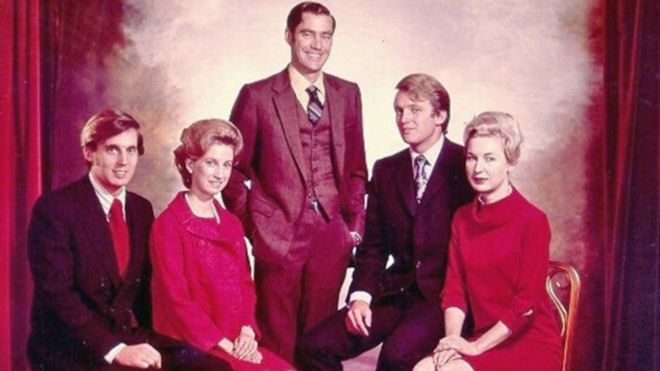
Derechos de autor de la imagenCAMPAÑA DE TRUMPImage captionFoto sin fecha de los hermanos Trump. De izquierda a derecha: Robert, Elizabeth, Fred, Donald y Maryanne.
La sobrina del presidente de Estados Unidos, Donald Trump, tiene previsto publicar unas memorias poco halagadoras sobre su tío. ¿Pero quién es Mary Trump y por qué ha decidido hacerlo ahora?
El lunes, la editorial Simon & Schuster anunció que, el 28 de julio, publicará Too Much And Never Enough: How My Family Created the World's Most Dangerous Man ("Demasiado y nunca suficiente: Cómo mi familia creó al hombre más peligroso del mundo"), escrito por ella.
El libro llegará a las estanterías apenas unas semanas antes de que comience la Convención Nacional Republicana, en la que su tío aceptará la nominación del partido para competir por ser reelegido en las elecciones de noviembre.
Las memorias revelan, supuestamente, cómo ella le entregó a The New York Times documentos confidenciales que el diario estadounidense usó en una investigación sobre las finanzas personales del presidente.
Según la exclusiva, que fue galardonada con un premio Pulitzer, el presidente estuvo involucrado en esquemas impositivos "fraudulentos" y recibió más de US$400 millones (en dinero de hoy) del imperio inmobiliario de su padre.
Testigo de primera mano
Amazon promociona el libro diciendo que la autora cuenta en él cómo su tío "se convirtió en el hombre que amenaza ahora la salud, la economía, la seguridad y el entramado social del mundo".
"Ella explicará cómo algunos eventos específicos y los patrones familiares crearon al hombre que actualmente ocupa la Oficina Oval, incluyendo la extraña y dañina relación entre Fred Trump y sus dos hijos mayores, Fred Jr. y Donald".
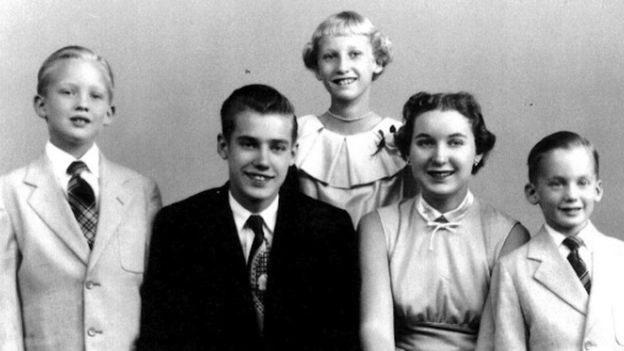
Derechos de autor de la imagenINSTAGRAM DONALD TRUMPImage captionDonald Trump de niño (izquierda) junto a sus hermanos.
El texto dice que la autora utiliza su conocimiento como "testigo de primera mano en numerosas celebraciones e interacciones familiares".
Y añade que, cuando las memorias salgan a la luz, acusarán al presidente de haber "desestimado y haberse burlado" de su padre desde que empezó a sufrir Alzheimer.
Padre alcohólico
Mary Trump, de 55 años, es la hija de Fred Trump Jr., el hermano mayor del presidente, quien murió en 1981 a los 42 años.
Fred sufrió de alcoholismo durante gran parte de su vida y su muerte prematura fue causada por un ataque cardíaco vinculado a su relación con la bebida.
El presidente Trump citó los problemas personales de su hermano durante la campaña de su gobierno para lidiar con la adicción a los opioides.
En una entrevista ofrecida el año pasado a The Washington Post, Trump dijo que lamentaba haber presionado a su hermano para que se sumara al negocio inmobiliario de su padre cuando él en realidad perseguía su sueño de convertirse en piloto.
Viejas disputas
Desde que Donald Trump se volvió presidente, Mary Trump ha evitado la atención del público, aunque en el pasado fue crítica con su tío.
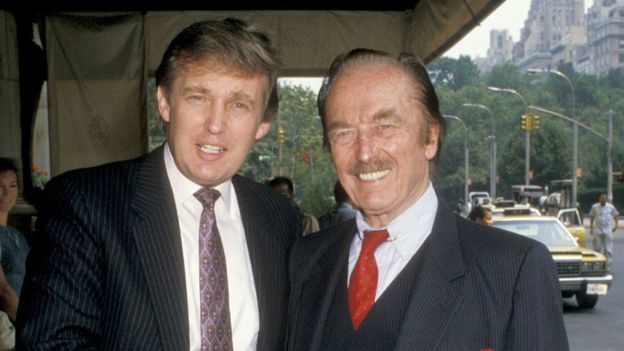
Derechos de autor de la imagenGETTY IMAGESImage captionDonald Trump y su padre, Fred Trump, en 1988 en el Plaza Hotel de Nueva York.
El rencor entre ellos se remonta al menos 20 años atrás, cuando ella y su hermano presentaron una demanda contra su tío y los hermanos de éste.
En 2000, Mary Trump y Fred Trump III presentaron una demanda en la que disputaban la parte que les correspondió del patrimonio del padre de Donald Trump, Fred Trump Sr.
Según ellos, el testamento de 1991 fue hecho en base a "fraude e influencia indebida" por parte de Donald Trump y sus hermanos, en momentos en que el patriarca de la familia sufría de demencia, según el diarioNew York Daily News.
Mary Trump le dijo al tabloide que su tía y tíos "deberían estar avergonzados con ellos mismos" por la batalla legal.
"Dada la familia que es, sería completamente ingenuo decir que la cuestión no tiene nada que ver con el dinero", le dijo al periódico.
Mary Trump y su hermano presentaron otra demanda después de que su seguro médico provisto por la compañía de Trump fuera cancelado, supuestamente como represalia por la primera acción legal.
El caso se cerró con un acuerdo y los detalles nunca fueron revelados, según reportes.
'Coach' personal
Según la revista People, los registros públicos muestran que Mary Lea Trump nació en mayo de 1965 y vive en Long Island, Nueva York.
La revista Forbes informa que se graduó enliteratura inglesa en la Universidad Tufts, en Massachusetts, y obtuvo su maestría en la misma materia en la Universidad Columbia, en Nueva York.
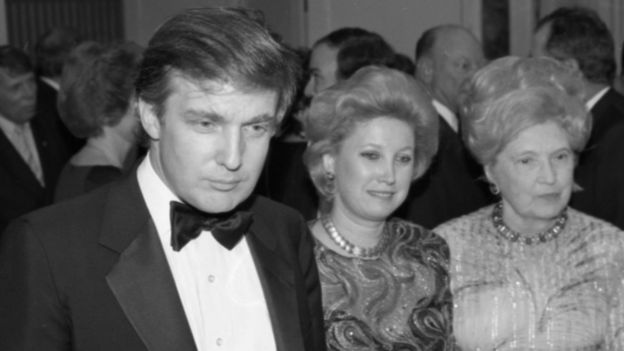
Derechos de autor de la imagenGETTY IMAGESImage captionLas memorias sacarán a relucir detalles poco conocidos y nada agradables de la familia Trump.
También hizo un doctorado en psicología clínica en la Universidad Adelphi, en Nueva York.
De acuerdo a un perfil en LinkedIn que ahora ha sido borrado, Mary Trump es coach personal certificada.
En 2012, fundó aparentemente la compañía Trump Coaching Group, con sede en Nueva York.
Su página web dice: "¿Estás deprimido y te sientes sin ánimo? ¿Estás buscando el verdadero significado de tu vida? Si la respuesta es sí, nuestros coach personales pueden sacarte de estas situaciones".
Según tuits atribuidos a ella misma, Mary Trump se sintió desanimada el día de la elección de su tío en 2016.
Un cuenta con su nombre tiene una publicación que dice: "Esta es una de las peores noches de mi vida".
En otro tuit llamaba a la derrotada rival del presidente, Hillary Clinton, "un extraordinario ser humano y funcionaria pública".
La biografía de su cuenta de Twitter contiene el hashtag Black LIves Matter y una bandera del orgullo gay.
The Ecotrackers Network Foundation, which since 2000 has been developing smart and community tourism, and called smart tourism thanks to its researchers and volunteers, has found a plant to solve respiratory problems and face the mortality caused by the covid-2 or coroana virus
Many of the volunteers, students and researchers, who were helped by the Ecotrackers Network, did research work on medicinal plants. But one of its members, me, Dr. Maximiliano Moreno, researched medicinal plants and native foods since 1982 when I conducted research on medicinal plants and foods from the Esmeraldas Province and the cloud forest, in support of the research on pre-Columbian foods that Dr. Eduardo Estrella my professor at the Faculty of Medicine, former director of the National Institute of Nutrition, investigated, which were published in his book the Bread of America.
Since 1983 as a professor of social medicine at the School of Medical Technology and Director of the Audiovisual Center of the Faculty of Medicine of the Central University, I developed a study on medicinal plants as part of the classes on the history and geography of diseases, which served as the basis for In 2010 I produced a TV series for public television, Ecuador TV: the series Salud y Vida en la Mitad del Mundo and I studied guaviduca with the Faculty of Biochemistry and Pharmacy of the Central University.
As a doctor in Atacames in 1984 I made the use of guaviduca in patients with typhoid and malaria, a plague of two diseases that simultaneously affected disastrously after the El Niño phenomenon of 1982, the use of guaviduca as an antispasmodic and supplement in rehydration succeeding. oral.
Since 1987 as a medical researcher at CIESPAL I have produced a documentary on cholera in Ecuador in which to the rehydration necessary to save lives, we added guaviduca as an antispasmodic successfully when vomiting was overcome. to alleviate abdominal pain prior to appalling diarrhea.
1989 as associate researcher of the Museum of the History of Medicine and medical researcher of malaria for the University of Hidelberg, in the Province of Esmeraldas, in which we investigated the use of awnings with pyrethrum in awnings, pyrethrum is an insecticidal plant from Ecuador , researched and used by the Nazis, I also investigated the use of guaviduca in the management of oral rehydration in decomposed malaria patients with severe dehydration from fevers and colic.
Since 1986 I collaborated with the Faculty of Chemistry and Pharmacy to research guaviduca, a medicinal plant that used it, and produced it as a dry leaf for the treatment of intestinal disorders, and sold it in covers through my company for the production and marketing of medicinal plants Ecuaplanta.
As a doctor in Atacames in 1984 I made the use of guaviduca in patients with typhoid and malaria, a plague of two diseases that simultaneously affected disastrously after the El Niño phenomenon of 1982, the use of guaviduca as an antispasmodic and supplement in rehydration succeeding. oral.
Since 1987 as a medical researcher at CIESPAL I have produced a documentary on cholera in Ecuador in which to the rehydration necessary to save lives, we added guaviduca as an antispasmodic successfully when vomiting was overcome. to alleviate abdominal pain prior to appalling diarrhea.
1989 as associate researcher of the Museum of the History of Medicine and medical researcher of malaria for the University of Hidelberg, in the Province of Esmeraldas, in which we investigated the use of awnings with pyrethrum in awnings, pyrethrum is an insecticidal plant from Ecuador , researched and used by the Nazis, I also investigated the use of guaviduca in the management of oral rehydration in decomposed malaria patients with severe dehydration from fevers and colic.
Since 1986 I collaborated with the Faculty of Chemistry and Pharmacy to research guaviduca, a medicinal plant that used it, and produced it as a dry leaf for the treatment of intestinal disorders, and sold it in covers through my company for the production and marketing of medicinal plants Ecuaplanta.
Since 1992 as an exporter and marketer of medicinal flowers and plants in Ecuador and Russia, I have been studying guaviduca with the Lomonosov University in Moscow, where my company Ecuaplanta its winery of flowers and medicinal plants and registration in Russia.
But the economic crises in Russia first and then in Ecuador that affected my company prevented me from continuing to finance and complete the studies on guaviduca.
In 1996 I collaborated with GTZ for an investigation on the non-timber use of the Forest in Ecuador and we signed an agreement for the study and patent rights of a medicinal plant, of the piperácea by then an unclassified, at the German Embassy in Ecuador, The plant studies would be done by Professor Nitz of the University of Munich.
In 1996 I went to Frankfurt, to the GTZ headquarters to find out about the results of the investigation and they gave me informally on a non-letterhead, without stamps or formalities, the results. University of Munich and GTZ ratified for me by the active principles of the plant what the popular knowledge said, that the plant was used for treatment of liver diseases, since it was a family of boldo, it was antispasmodic, but the novelty was that it was used for respiratory diseases as an adjunct or complementary therapy, even for tuberculosis.
Despite the fact that tuberculosis became a global epidemic and is a pathology that accompanies HIV, AIDS became a pandemic, as it is until now, since HIV reduces defenses, and kills in the fields of poor countries by malaria, which became known as supermalaria, and through tuberculosis, in poor urban areas through the so-called super tuberculosis, which is mandatory in preventive medical care, to carry out tests against tuberculosis in patients with more than 15 days of cough, since this disease has gone global again despite the BCG vaccine,
However, from all these efforts, to date we have not been able to use this plant in the treatment of patients with respiratory problems because there were changes in Ecuadorian legislation and in the agreements on intellectual property signed between Ecuador and the European Economic Community, it is not recognized the patent or intellectual property of medicinal plants is in the interest of the University of Munich, since as they cannot have intellectual property rights, it is not possible to recover the expenses, nor to compensate the time and work done.
The new Ecuadorian legislation that prohibits patents originating in Ecuador's natural products, which was the result of the theft of intellectual property on three active and use principles that had been obtained by pharmaceutical companies such as PFIZER, which was developing a more powerful anesthetic that the morphine of the tricolor toad, and the theft of intellectual property from indigenous people by an American who had patented the use of drago blood and ayahuasca in the United States.
This also led to disinterest on the part of Germany, and the University of Munich to continue the investigation as we had agreed in the German Embassy in Ecuador and to the use and registration of patents of the products obtained from these investigations.
Since 2000, with the Ecotrackers Foundation, I have worked with foreign volunteers, in the research, use and protection of medicinal plants and ancestral knowledge, some of whose works are published in the Ecotrackers blogs and in the videos of Health and Life in the Middle of the World. Ecotrackers
Since 2008, as a doctor from the Ministry of Health in sensitive areas such as the northern border in times of Plan Colombia, the war against drug trafficking and the FARC, in the province of Carchi, the SARS epidemic, AHINI, where I successfully used the guaviduca to treat patients with this disease in La Concepción and especially in the Parish of San Juan de Lachas with the Awa nationality, very reluctant to medications. Both parishes in the troubled area of the Mira River that flows into Tumaco, were territory of armed conflict on the western border of southern Colombia and northern Ecuador.
Since 2011, times of the dengue, Chicungunya, Sika epidemics and the earthquake swarm from April 16, 2016 to February 2017 in the South of Esmeraldas, as a doctor of the Social Security Peasant dispensaries in Muisne, investigate and I developed the use of medicinal plants, especially tobacco, guaviduca and holy spirit when AH1N or swine flu reappeared, in addition to studying other plants such as sea and beach waters, solar radiation, the moon, altitude and the quality of water and air as therapeutic resources for I also continued with the studies begun in 1982 of native foods, as therapeutic resources to develop health tourism to the Galera San Francisco Marine Reserve.
Since 2017 I have resumed the research and use of medicinal plants, of rural medicine. traditional medicine, environmental medicine and Ecuadorian telemedicine to develop to develop health tourism to healing places such as hot springs, beaches, mountains, or forests such as the cloud forest, the Galera San Francisco Reserve on the Coast, Quilotoa in the Andes and Arajuno and the Morona River in the Amazon because they can steal from us the price of our raw materials, our food or medicinal plants and they can produce them elsewhere, but they cannot steal the Andes, the Amazon, the Coast and the Ocean. Pacific nor our ancestral cultures, but they can rob us of our healing places.
In Tandapi, just an hour and a half from Quito, we are creating a center for research and use of the cloud forest and its plants, food, radiation, humidity and height as a therapeutic resource.
Among the plants we work on in the cloud forest is the guaviduca.
This emergency due to the pandemic added to the economic crisis produced by the government and the quarantine emergency forces me and the Ecotrackers Foundation to offer this therapeutic alternative, which is immediately at hand to the populations of Ecuador, Colombia, Peru, Bolivia, and Venezuela that are hit by political, economic and pandemic crises in a particular way, as our countries do not have billions to return their inhabitants to normal after this collapse caused by self-isolation and social distance.
To the migratory phenomenon and the protests due to factors specific to each country, now the health crisis of the pandemic and the fall in the price of oil hitting Ecuador and Venezuela above all.
Since 2017 I have resumed the research and use of medicinal plants, of rural medicine. traditional medicine, environmental medicine and Ecuadorian telemedicine to develop to develop health tourism to healing places such as hot springs, beaches, mountains, or forests such as the cloud forest, the Galera San Francisco Reserve on the Coast, Quilotoa in the Andes and Arajuno and the Morona River in the Amazon because they can steal from us the price of our raw materials, our food or medicinal plants and they can produce them elsewhere, but they cannot steal the Andes, the Amazon, the Coast and the Ocean. Pacific nor our ancestral cultures, but they can rob us of our healing places.
In Tandapi, just an hour and a half from Quito, we are creating a center for research and use of the cloud forest and its plants, food, radiation, humidity and height as a therapeutic resource.
Among the plants we work on in the cloud forest is the guaviduca.
This emergency due to the pandemic added to the economic crisis produced by the government and the quarantine emergency forces me and the Ecotrackers Foundation to offer this therapeutic alternative, which is immediately at hand to the populations of Ecuador, Colombia, Peru, Bolivia, and Venezuela that are hit by political, economic and pandemic crises in a particular way, as our countries do not have billions to return their inhabitants to normal after this collapse caused by self-isolation and social distance.
To the migratory phenomenon and the protests due to factors specific to each country, now the health crisis of the pandemic and the fall in the price of oil hitting Ecuador and Venezuela above all.
Until today it is not possible to reestablish contact with the University of Munich to reactivate the studies and results due to the closure of the embassy, the difficulties of communication in Spanish with the University, so with the support of the Ecotrackers Network Foundation we dare to propose the use of guaviduca or piper carpunia as a therapeutic resource to curb the mortality of the coronavirus
The coronavirus pandemic that today attacks Ecuador, a country that after a boom in the government of Rafael Correa, has fallen into an economic, moral and now sanitary crisis in the government of Lenín Moreno, making Guayaquil the focus epidemiological most important in South America and tropical areas of the American continent, creates the need to request health authorities and residents of the country to use guviduca or pipercarpunia as a treatment at hand, since deaths and plague threatens us everyone and the country, despite the great health infrastructure and the extraordinary health network that the Correa government developed, the ineffectiveness with which this network was carried out in the times of Lenin Moreno, have made it a problem rather than in a solution, since patients are cared for in hospitals that do not radically separate infected patients from other patients, so infected patients who carry won the hospitals come to harm others.
In China, hospitals were built only for patients who are victims of the coronavirus. In Ecuador, patients are taken to hospitals, where they convert the doctor, nurse, assistant, and cleaning personnel into contaminants that pass the disease on to other patients, who are not plagued, are operated, subjected to radiation, weak due to other diseases, accidents, etc. but because they are simply hospitalized they are already more vulnerable.
If we add to this that doctors do not have or cannot change gloves, gowns, and masks when they pass from one patient with coronavirus to another, the mere fact of inspecting patients or laboratory workers and those who take the temperature, turns them into transmission vehicles in and out of hospitals.
Managing and spreading the plague has so many new complexities, such that the person doing the diagnostic test, even if they only take the temperature, should change gloves, mask and gown from head to toe to avoid passing the virus to another person who comes just to know whether or not he is a healthy carrier.
Guayaquil, which now does not know what to do with the corpses of the deceased, and Ecuador, which was the first to feel like a coronavirus pandemic in South America, has the possibility of using a medicinal plant that exists in its cloud forest, like Colomibia, Peru and Bolivia, called guaviduca or piper carpunia, as the main therapeutic resource, since in addition to the plague, compulsory quarantine has led their economies to such a collapse, especially Ecuador, that after two weeks of quarantine, the common people have With little money to eat, he cannot pay for basic services, so his suspension has been prohibited for non-payment, including bank loans, leases and worse to pay for private doctors, exams or expensive vaccines.
This medicinal plant can be an urgent alternative for immediate use if the state and people begin to use them, since their production already exists, and will not produce any undesirable effects such as medicines or vaccines, since their use has centuries.
This medicinal plant can have the advantage over any medicine because the medicines can produce undesirable effects, as happened with thalidomide used as medicine against leprosy and until now in psoriasis that produced thousands of children without feet, without hands, or kanamycin an aminoglycoside antibiotic against gram negative bacteria, gentamicin family, which despite 10 years of laboratory studies to be approved by the US FDA, to rule out undesirable effects, produced meniere deafness and vertigo.
In vaccines, the story also has notorious failures as the first vaccine against polio that was injectable and was obtained from attenuated cultures of the virus in the monkey's brain or kidneys and became the first means of spreading HIV. AIDS that later became the worst plague that is spread by sexual intercourse and the use of syringes in drug addicts. Today the polio vaccine is oral and is not grown in monkey parts.
Guaviduca or piper carpunia also has the advantage that it does not affect the human immunological system as antibiotics do, although they help us against bacteria and parasites, at the same time they reduce our immune resistance by reducing the effort of our own system. defense. That is why drugs and vaccines have as their main problem the time they need to do studies in mice and then in humans.
Guaviduca's role is to regulate the body's response so that febrile reactions, coughs, respiratory congestion, or respiratory problems are not such that they do not become the cause of death.
Cordonavirus is leading us to redefine disease prevention and management. Thus, it leads us to redefine medical treatment, which is considered important, and to eliminate the cause that causes the disease, or the so-called etymological cause, be it a bacterium, a virus, a parasite, an accident, dehydration, etc. without estimating the capacity of each human being to withstand injury, attack or imbalance, which may be different from one to another person. There are patients who can react favorably, unfavorably, or without noticeable reaction to the problem.
This is precisely what happens with the many healthy carriers of the coronavirus, who are people who react favorably to the disease or do not react noticeably like children, and young people, but in the elderly or with pre-existing debilitating diseases it is the opposite, they produce insuperable symptoms that trigger a cascade of deadly reactions.
The fundamental objective of the use of guaviduca, as therapeutic resources, is to use non-dangerous and deadly medicinal plants such as shanshi, a plant from which atropine is obtained and is poisonous, or the poppy from which hallucinogens are obtained that create addiction, but a Food plant used as a condiment for centuries, which has the property of regulating the body's response to viral and bacterial diseases that affect the respiratory or digestive tract
La Ecotrackers Network Foundation, che dal 2000 sviluppa il turismo intelligente e comunitario e ha chiamato il turismo intelligente grazie a ricercatori e volontari, ha trovato un impianto per risolvere i problemi respiratori e affrontare la mortalità causata dal virus covid-2 o coroana
Molti volontari, studenti e ricercatori, che sono stati aiutati dalla rete Ecotrackers, hanno svolto attività di ricerca sulle piante medicinali. Ma uno dei suoi membri, io, il dott. Maximiliano Moreno, ha studiato piante medicinali e alimenti autoctoni dal 1982, quando ho condotto ricerche su piante e alimenti medicinali della provincia di Esmeraldas e della foresta pluviale, a sostegno della ricerca su Cibi precolombiani che il dottor Eduardo Estrella, mio professore alla Facoltà di medicina, ex direttore del National Institute of Nutrition, ha studiato, pubblicati nel suo libro Bread of America.
Dal 19883 come professore di medicina sociale presso la School of Medical Technology e direttore del Centro audiovisivo della Facoltà di Medicina dell'Università Centrale, ho sviluppato uno studio sulle piante medicinali come parte delle lezioni di storia e geografia delle malattie, che è servito da base per Nel 2010 ho prodotto una serie TV per la televisione pubblica, l'Ecuador TV: la serie Salud y Vida nella Mitad del Mundo e ho studiato guaviduca con la Facoltà di Biochimica e Farmacia dell'Università Centrale.
Come medico in Atacames nel 1984 ho fatto uso di guaviduca in pazienti con tifo e malaria, una piaga di due malattie che hanno contemporaneamente colpito in modo disastroso dopo il fenomeno El Niño del 1982, l'uso di guaviduca come antispasmodico e integratore nella reidratazione con successo. orale.
Dal 1987 come ricercatore medico presso il CIESPAL ho prodotto un documentario sul colera in Ecuador in cui alla reidratazione necessaria per salvare vite umane, abbiamo aggiunto con successo guaviduca come antispasmodico quando il vomito è stato superato. alleviare il dolore addominale prima di spaventare la diarrea.
1989 come ricercatore associato del Museo di Storia della Medicina e ricercatore medico di malaria per l'Università di Hidelberg, nella Provincia di Esmeraldas, in cui abbiamo studiato l'uso di tende da sole con piretro nelle tende da sole, il piretro è una pianta insetticida dell'Ecuador , studiato e utilizzato dai nazisti, ho anche studiato l'uso di guaviduca nella gestione della reidratazione orale in pazienti con malaria decomposta con grave disidratazione da febbre e coliche.
Dal 1986 ho collaborato con la Facoltà di Chimica e Farmacia per ricercare la guaviduca, una pianta medicinale che la utilizzava e la producevo come foglia secca per il trattamento dei disturbi intestinali e la vendevo in copertina attraverso la mia azienda per la produzione e la commercializzazione di piante medicinali Ecuaplanta.
Dal 2017 ho ripreso la ricerca e l'uso delle piante medicinali, della medicina rurale. medicina tradizionale, medicina ambientale e telemedicina ecuadoriana da sviluppare per sviluppare il turismo della salute in luoghi curativi come sorgenti termali, spiagge, montagne o foreste come la foresta pluviale, la Riserva sulla costa di Galera San Francisco, Quilotoa nelle Ande e Arajuno e il fiume Morona in Amazzonia perché possono rubarci il prezzo delle nostre materie prime, del nostro cibo o piante medicinali e possono produrli altrove, ma non possono rubare le Ande, l'Amazzonia, la Costa e l'Oceano. Pacifico né le nostre culture ancestrali, ma possono derubarci dei nostri luoghi di guarigione.
A Tandapi, a solo un'ora e mezza da Quito, stiamo creando un centro per la ricerca e l'uso della foresta pluviale e delle sue piante, cibo, radiazioni, umidità e altezza come risorsa terapeutica.
Tra le piante su cui lavoriamo nella foresta pluviale c'è la guaviduca.
Questa emergenza dovuta alla pandemia aggiunta alla crisi economica prodotta dal governo e l'emergenza di quarantena costringe me e la Fondazione Ecotrackers a offrire questa alternativa terapeutica, che è immediatamente a portata di mano per le popolazioni di Ecuador, Colombia, Perù, La Bolivia e il Venezuela sono colpiti da crisi politiche, economiche e pandemiche in un modo particolare, poiché i nostri paesi non hanno miliardi per riportare i loro abitanti alla normalità dopo questo crollo causato dall'auto-isolamento e dalla distanza sociale.
Al fenomeno migratorio e alle proteste dovute a fattori specifici di ciascun paese, ora la crisi sanitaria della pandemia e la caduta del prezzo del petrolio colpiscono soprattutto l'Ecuador e il Venezuela.
Fino ad oggi non è possibile ristabilire il contatto con l'Università di Monaco per riattivare gli studi e i risultati a causa della chiusura dell'ambasciata, le difficoltà di comunicazione in spagnolo con l'Università, quindi con il supporto della Ecotrackers Network Foundation osiamo proporre l'uso di guaviduca o piper carpunia come risorsa terapeutica per frenare la mortalità del coronavirus
La pandemia di coronavirus che attacca oggi l'Ecuador, un paese che dopo un boom del governo di Rafael Correa, è caduto in una crisi economica, morale e ora sanitaria nel governo di Lenín Moreno, mettendo al centro Guayaquil epidemiologico più importante in Sud America e nelle aree tropicali del continente americano, crea la necessità di richiedere alle autorità sanitarie e ai residenti del paese di usare guviduca o pipercarpunia come trattamento a portata di mano, poiché i decessi e la peste ci minacciano di tutti e il Paese, nonostante la grande infrastruttura sanitaria e la straordinaria rete sanitaria sviluppata dal governo Correa, l'inefficacia con cui questa rete è stata realizzata ai tempi di Lenin Moreno, ha reso un problema piuttosto che una soluzione, poiché i pazienti sono curati negli ospedali che non separano radicalmente i pazienti infetti da altri pazienti, quindi i pazienti infetti che portano vinto gli ospedali vengono a fare del male agli altri.
In Cina, gli ospedali sono stati costruiti solo per i pazienti che sono vittime del coronavirus. In Ecuador, i pazienti vengono portati negli ospedali, dove convertono il medico, l'infermiere, l'assistente e il personale delle pulizie in contaminanti che trasmettono la malattia ad altri pazienti, che non sono afflitti, vengono operati, sottoposti a radiazioni, debole a causa di altre malattie, incidenti, ecc. ma poiché sono semplicemente ricoverati in ospedale sono già più vulnerabili.
Se a ciò aggiungiamo che i medici non hanno o non possono cambiare guanti, camici e maschere quando passano da un paziente con coronavirus a un altro, il semplice fatto di ispezionare i pazienti o gli operatori di laboratorio e coloro che prendono la temperatura, li trasforma in veicoli di trasmissione dentro e fuori dagli ospedali.
Gestire e diffondere la peste ha così tante nuove complessità, in modo tale che la persona che esegue il test diagnostico, anche se prende solo la temperatura, dovrebbe cambiare guanti, maschera e abito dalla testa ai piedi per evitare il passaggio del virus a un'altra persona che viene a sapere solo se è un vettore sano.
Guayaquil, che ora non sa cosa fare con i cadaveri del defunto, e l'Ecuador, che è stato il primo a sentirsi una pandemia di coronavirus in Sud America, ha la possibilità di usare una pianta medicinale che esiste nella sua foresta pluviale, come la Colomibia, Perù e Bolivia, chiamate guaviduca o piper carpunia, come principale risorsa terapeutica, poiché oltre alla pestilenza, la quarantena obbligatoria ha portato le loro economie a un tale collasso, in particolare l'Ecuador, che dopo due settimane di quarantena, la gente comune ha Con pochi soldi da mangiare, non può pagare per i servizi di base, quindi la sua sospensione è stata proibita per il mancato pagamento, compresi prestiti bancari, contratti di locazione e peggio ancora per pagare per medici privati, esami o vaccini costosi.
Questa pianta medicinale può essere un'alternativa urgente per l'uso immediato se lo stato e le persone iniziano a usarli, poiché la loro produzione esiste già, e non produrrà effetti indesiderati come medicinali o vaccini, poiché il loro uso ha secoli.
Questa pianta medicinale può avere il vantaggio rispetto a qualsiasi medicinale perché i medicinali possono produrre effetti indesiderati, come è successo con la talidomide usata come medicinale contro la lebbra e fino ad ora nella psoriasi che ha prodotto migliaia di bambini senza piedi, senza mani o kanamicina un antibiotico aminoglicosidico contro i batteri gram negativi, la famiglia della gentamicina, che nonostante 10 anni di studi di laboratorio approvati dalla FDA degli Stati Uniti, per escludere effetti indesiderati, ha prodotto sordità e vertigini nel meniere.
Nei vaccini, la storia ha anche noti fallimenti come il primo vaccino contro la polio che era iniettabile ed è stato ottenuto da colture attenuate del virus nel cervello o nei reni della scimmia e divenne il primo mezzo di diffusione dell'HIV. L'AIDS che in seguito divenne la peggiore piaga che si diffuse attraverso i rapporti sessuali e l'uso di siringhe nei tossicodipendenti. Oggi il vaccino contro la poliomielite è orale e non viene coltivato in parti di scimmia.
La guaviduca o la piper carpunia ha anche il vantaggio di non influenzare il sistema immunologico umano come fanno gli antibiotici, il che, nonostante ci aiuti contro batteri e parassiti, allo stesso tempo riduce la resistenza immunitaria riducendo lo sforzo del nostro sistema. difesa. Ecco perché farmaci e vaccini hanno come problema principale il tempo necessario per fare studi sui topi e poi sull'uomo.
Il ruolo di Guaviduca è di regolare la risposta del corpo in modo che reazioni febbrili, tosse, congestione respiratoria o problemi respiratori non siano tali da non diventare la causa della morte.
Il cordonavirus ci sta portando a ridefinire la prevenzione e la gestione delle malattie. Pertanto, ci porta a ridefinire il trattamento medico, che è considerato importante, e ad eliminare la causa che causa la malattia, o la cosiddetta causa etimologica, che si tratti di un batterio, un virus, un parassita, un incidente, una disidratazione, ecc. senza stimare la capacità di ciascun essere umano di resistere a lesioni, attacchi o squilibri, che possono essere diversi da uno all'altro. Ci sono pazienti che possono reagire in modo favorevole, sfavorevole o senza una reazione evidente al problema.
Questo è esattamente ciò che accade con i molti portatori sani del coronavirus, che sono persone che reagiscono favorevolmente alla malattia o non reagiscono in modo evidente come i bambini e i giovani, ma negli anziani o con malattie debilitanti preesistenti è il contrario, producono sintomi insuperabili che scatenano una cascata di reazioni mortali.
L'obiettivo fondamentale dell'uso della guaviduca, come risorse terapeutiche, è quello di utilizzare piante medicinali non pericolose e mortali come lo shanshi, una pianta da cui si ottiene l'atropina ed è velenosa, o il papavero da cui si ottengono allucinogeni che creano dipendenza, ma un Pianta alimentare usata da secoli come condimento, che ha la proprietà di regolare la risposta dell'organismo alle malattie virali e batteriche che colpiscono il tratto respiratorio o digestivo.
 CAMPAÑA DE TRUMP
 INSTAGRAM DONALD TRUMP
 GETTY IMAGES
 GETTY IMAGES


